Biophotonic Sensing Group
Lund University
Explore Insect Abundance and Biodiversity
with Entomological LiDAR and Photonic Sensing
Highlighting Our Three Key Setups:
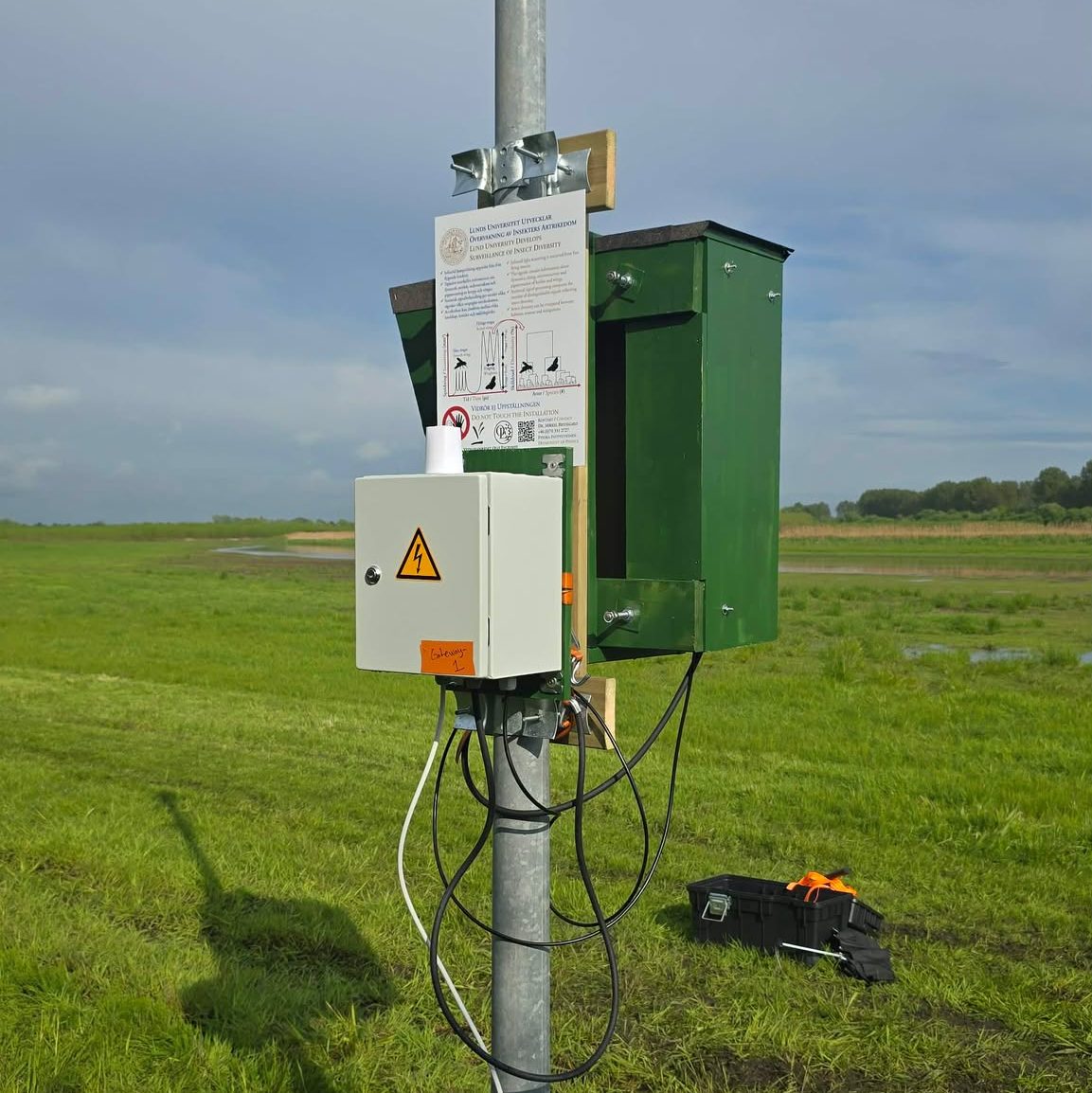
Scheimpflug Lidar
The Scheimpflug lidar combines the Scheimpflug principle with lidar technology for versatile long-distance imaging of insects in flight. This dual-band system, operating at 808 and 980 nm, is built for biodiversity monitoring: a network of these sensors is being deployed across Scandinavia to track how insect diversity changes over time. By comparing rewilding and restoration sites against established nature reserves, the project aims to reveal how landscape management shapes insect communities.
DUV Camera and Lidar
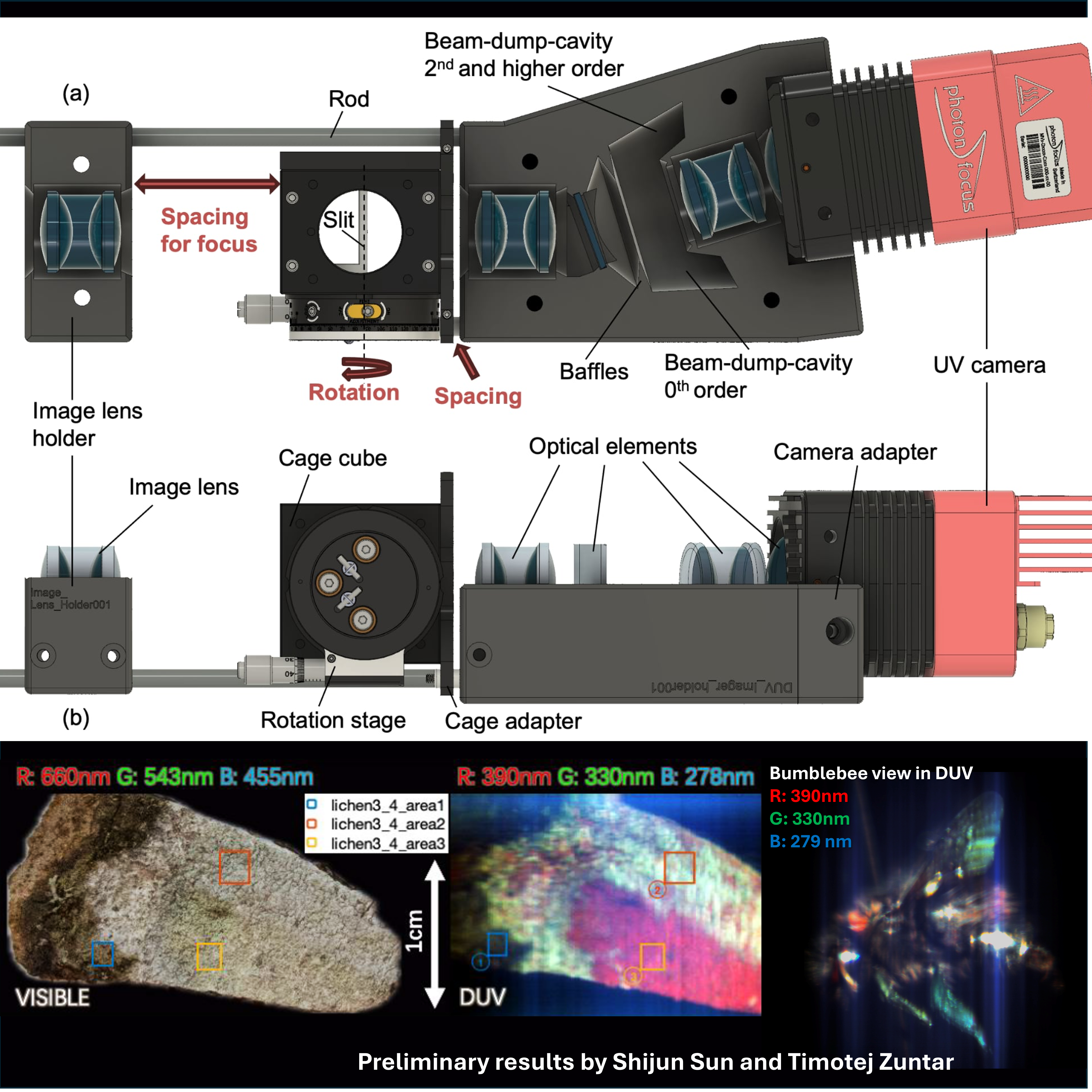
The deep-ultraviolet system opens up a spectral region (200–400 nm) never before used for remote biological sensing, made possible by compact laser-driven plasma light sources. In the DUV, proteins, biomolecules, and pigments leave distinct absorption signatures, giving far greater species specificity than longer wavelengths. We are developing it for biodiversity monitoring on two fronts: identifying indicator lichen species on tree trunks as markers of forest health, and detecting the pollen carried by wild pollinators in flight—revealing which plants insects visit, without the biases of traps.
SWIR Hyperspectral Camera
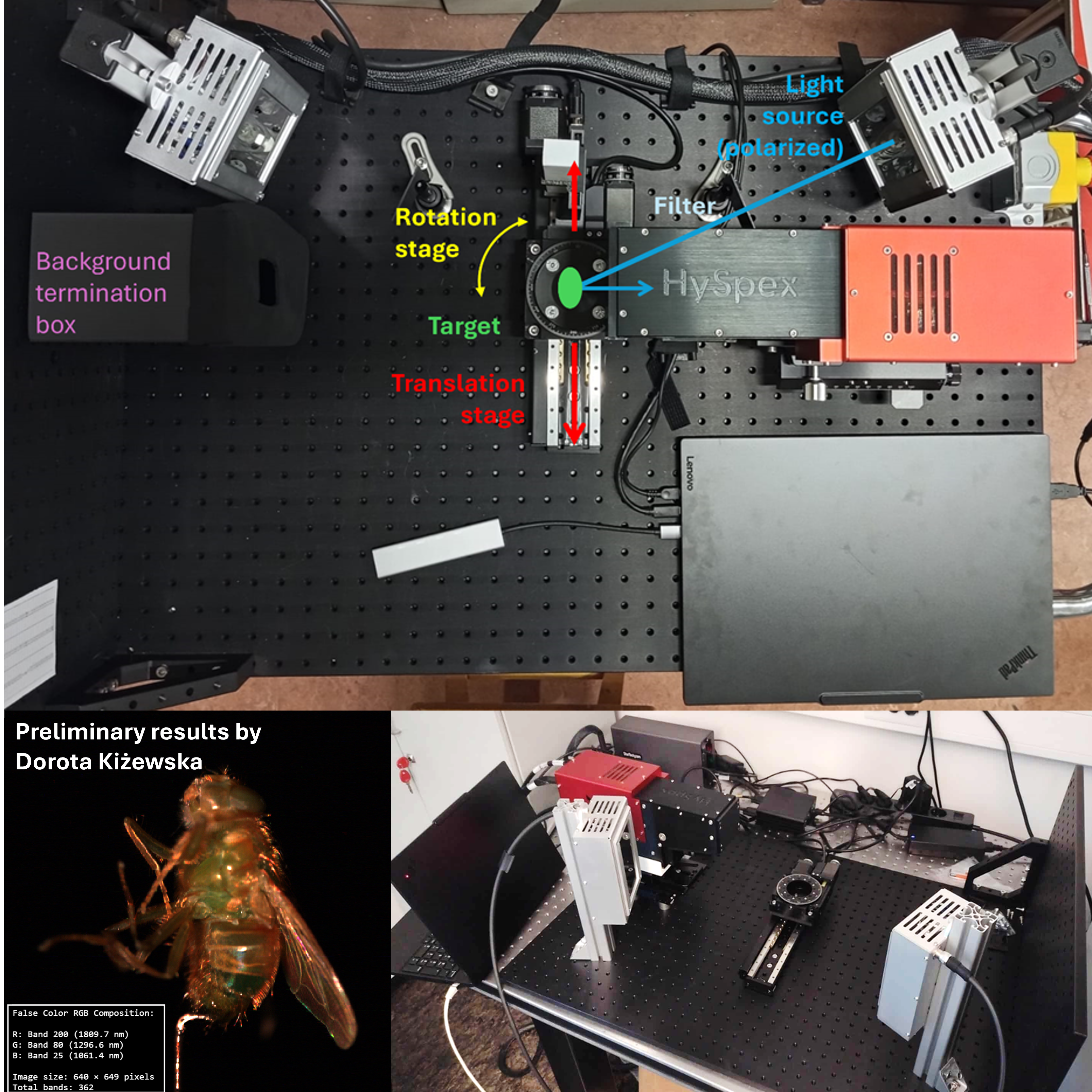
The SWIR hyperspectral camera records detailed images across hundreds of narrow bands in the short-wave infrared (960–2500 nm), where water, melanin, and lipids leave distinct absorption signatures in biological tissue. We use it to build a physics-based model of how insects scatter light—isolating the optical properties of the insect body and wings so that lidar signals can be simulated rather than catalogued specimen by specimen. Current work includes documenting body and wing structure for the model and pairing the camera with a DMD (digital micromirror device) for structured illumination.